
Case Study
AI Property Description Integration
Keller Williams · Proprietary real estate platform · Senior Product Designer · Sole designer, end-to-end
Overview
As a Senior Product Designer at Keller Williams, I led the UI and UX strategy for integrating generative AI into the proprietary real estate platform. The goal was to transform the complex, time consuming task of writing property descriptions into an elegant and intuitive experience for over 160,000 agents.
The Challenge
Real estate agents often face friction when drafting compelling, professional listing descriptions for diverse properties. The objective was to design a tool that leverages AI to generate high quality copy while ensuring the experience remained accessible for both first time users and sophisticated experts.
My Role
I served as the lead designer for this initiative, overseeing the end to end innovation process from requirements discovery to high fidelity prototyping. My responsibilities included:
UI/UX Design: Crafting the interface for AI prompt inputs and result editing.
Design Strategy: Aligning the AI integration with broader business goals and product roadmaps.
Cross Functional Collaboration: Partnering with Product Managers and Engineers to define AI behavior and technical constraints.
The Process
1. Research and Requirements Discovery
I participated in generative research to understand how agents currently manage listing descriptions. This involved identifying key data points agents need to emphasize, such as property features and neighborhood highlights.
2. User Flows and Wireframing
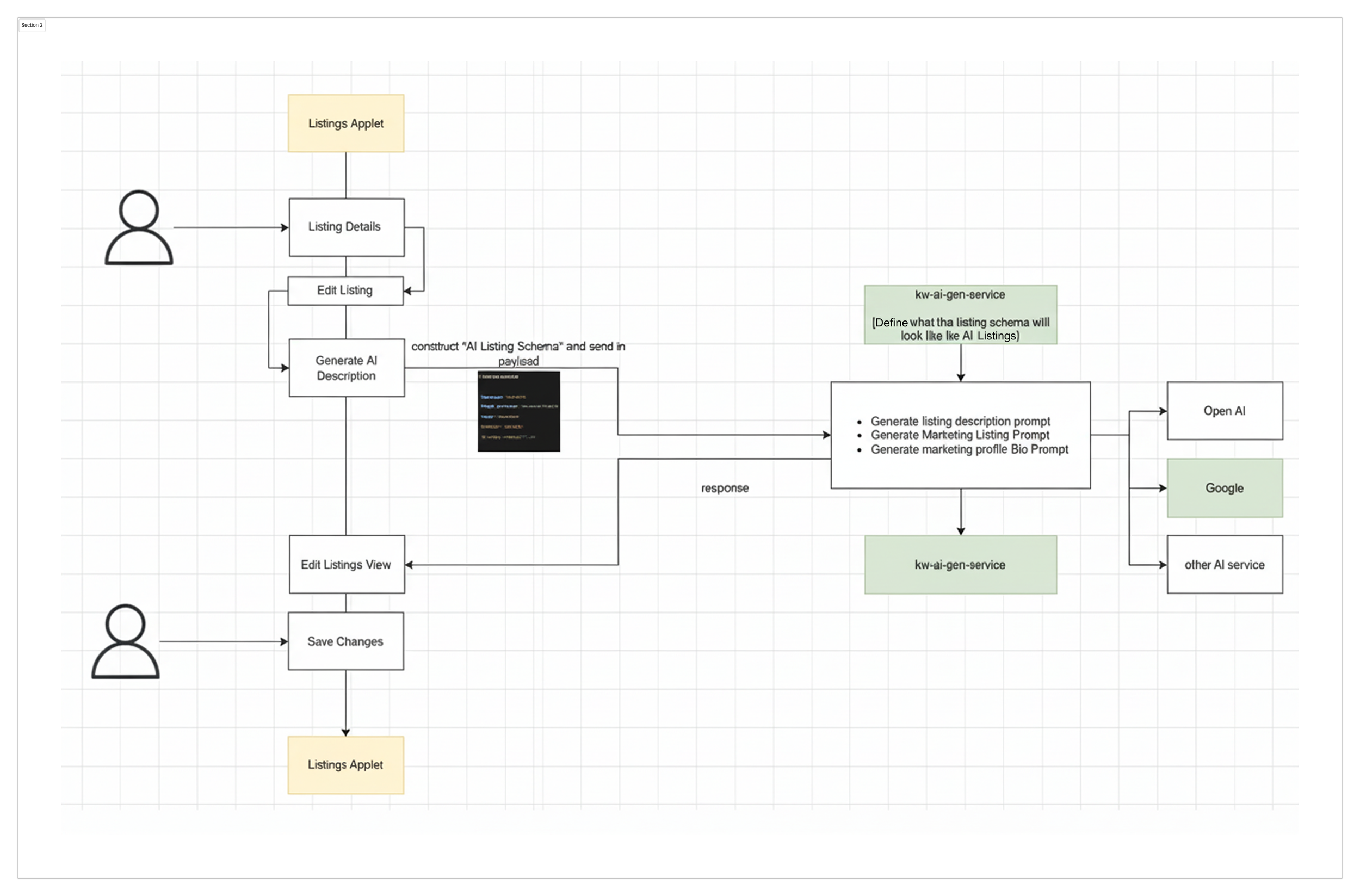
I developed detailed system flows to visualize the agent journey from the initial listing creation to the AI generation phase. I focused on the "Internal Listings" environment, ensuring the AI tool was a seamless part of the existing workflow.
3. Iterative Design and Prototyping
Using Figma, I designed multiple iterations of the AI pop up modal. Key design decisions included:
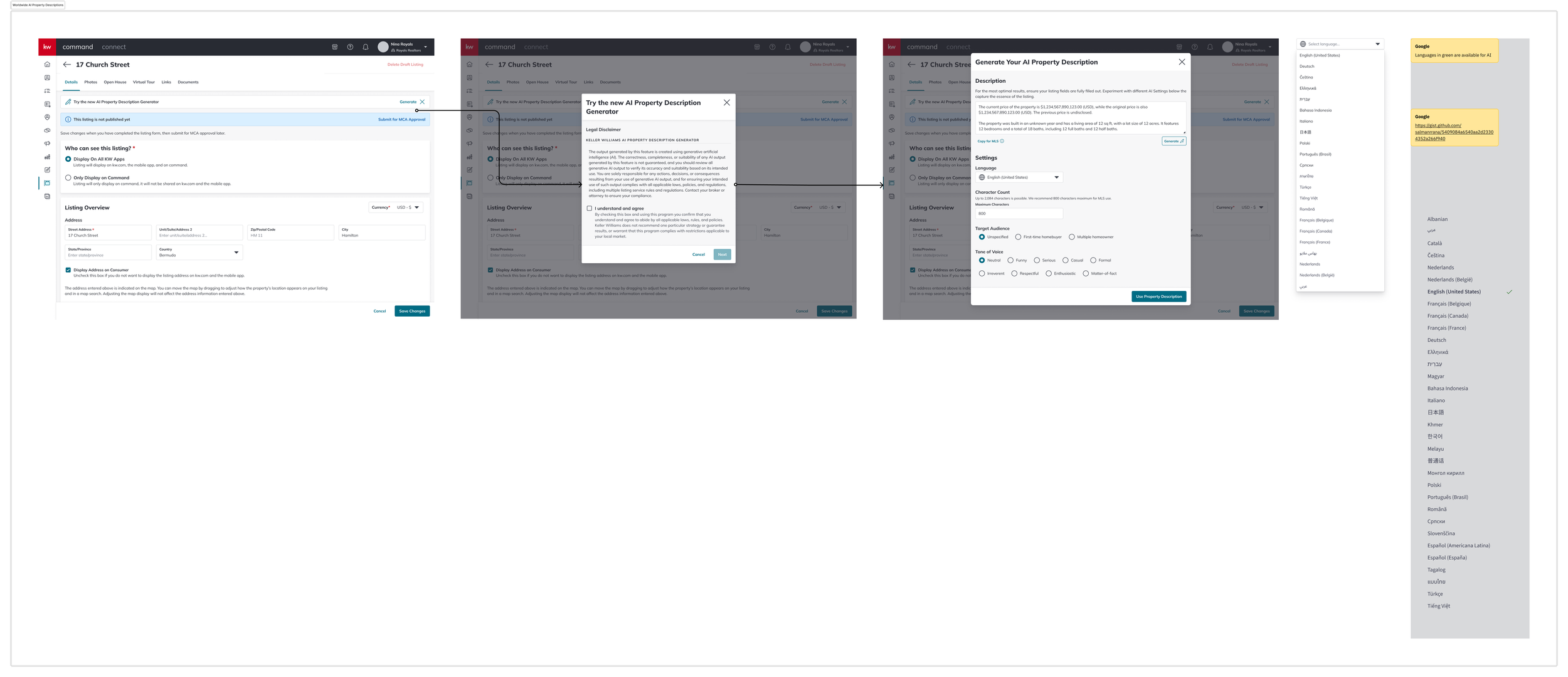
Language Integration: Adding specific language selection options within the modal to cater to diverse consumer markets.
Prompt Refinement: Creating a structured input field that allows agents to guide the AI with specific property attributes.
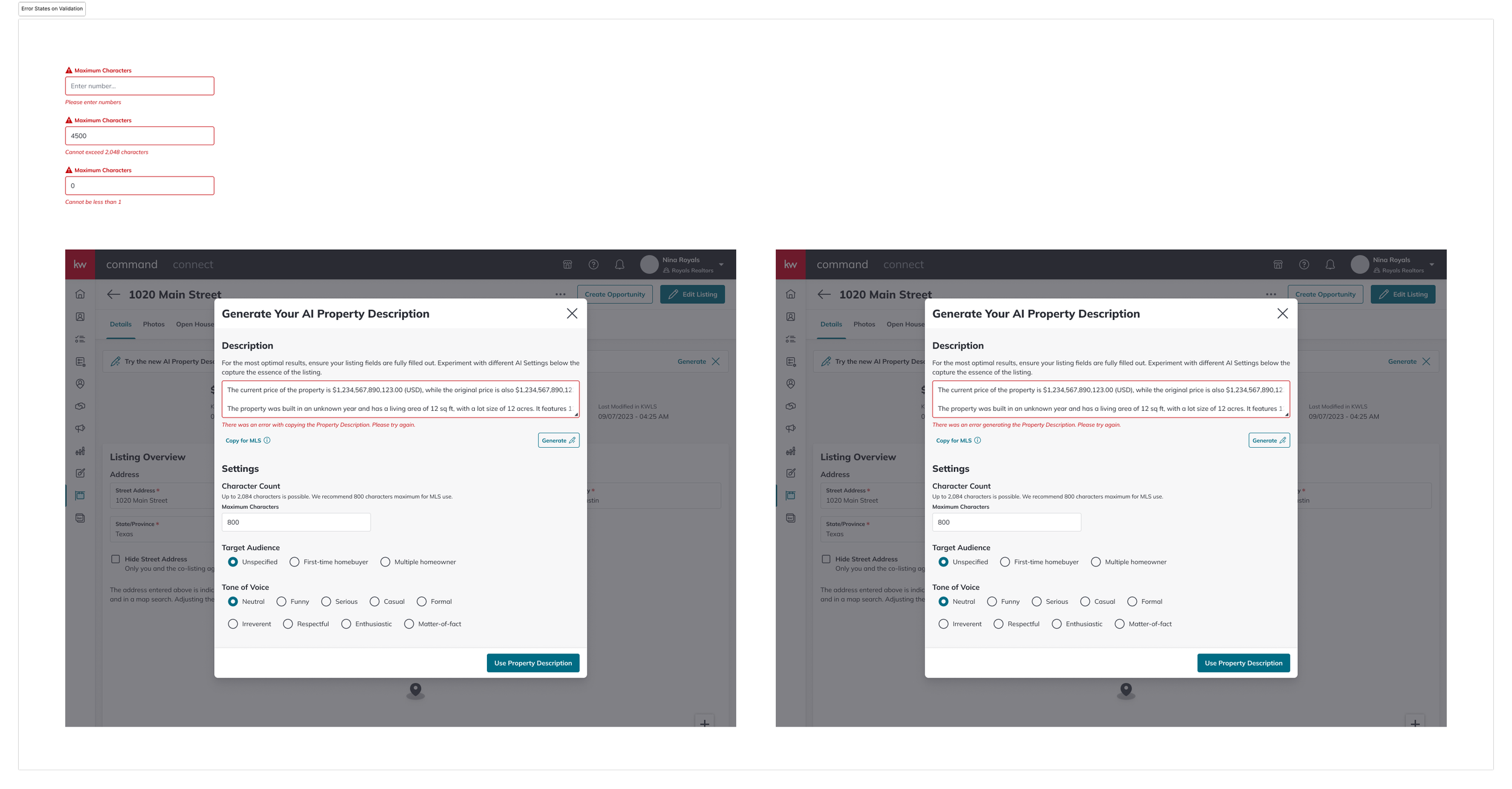
Interactive Editing: Ensuring that AI generated outputs are easily editable within a clean interface before final publishing.
4. Design Critiques and Stakeholder Feedback
I utilized sticky notes and design labs to gather feedback from focus groups and stakeholders. This allowed for real time adjustments to the UI, ensuring the final designs were both visually appealing and functional.
The Solution
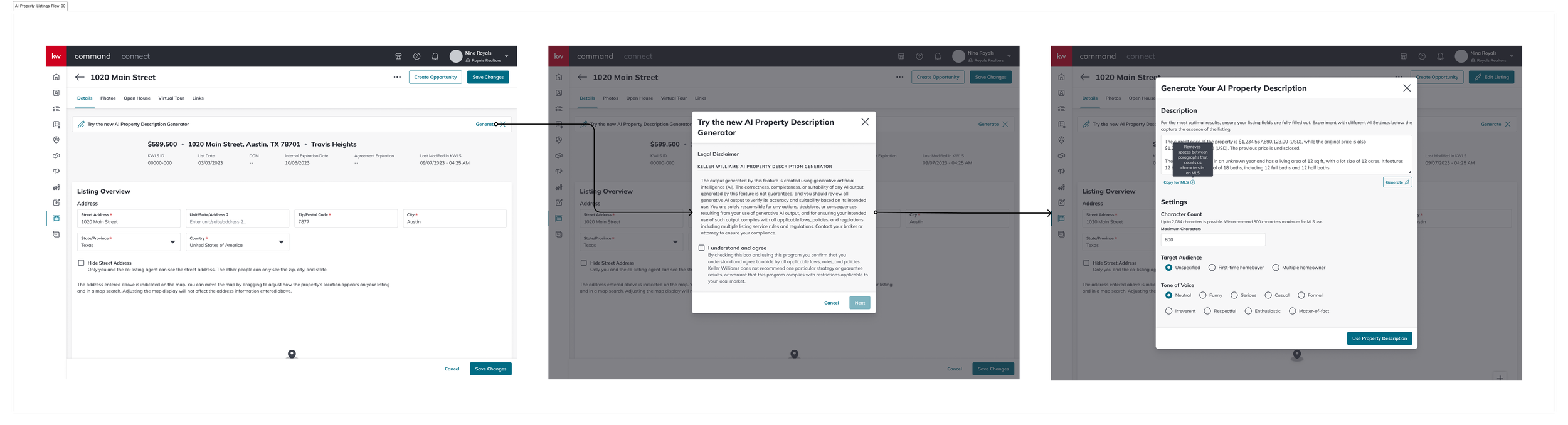
The final design featured a streamlined AI modal integrated directly into the listing editor. This solution provided agents with a "starting point" for their descriptions, significantly reducing the time spent on manual drafting. By governing the design operations and maintaining a strict naming convention, I ensured the project was developer ready and scalable for future cross platform updates.
Impact
Efficiency: Streamlined the listing process by automating a major portion of content creation. This feature eliminated the need for our users to pay a separate application $25/mo.
Accessibility: Delivered an intuitive interface that balances utility with ease of use for a global user base.
Consistency: Leveraged a centralized design system to ensure the AI tool felt like a native, cohesive part of the Keller Cloud ecosystem.